
RedotPay Crypto Card Review 2026
RedotPay Card is a custodial stablecoin-based card with no annual fee, one-time issuance fees of $10 virtual or $100 physical, and no standard cashback unless you pay for RedotPay Pro.
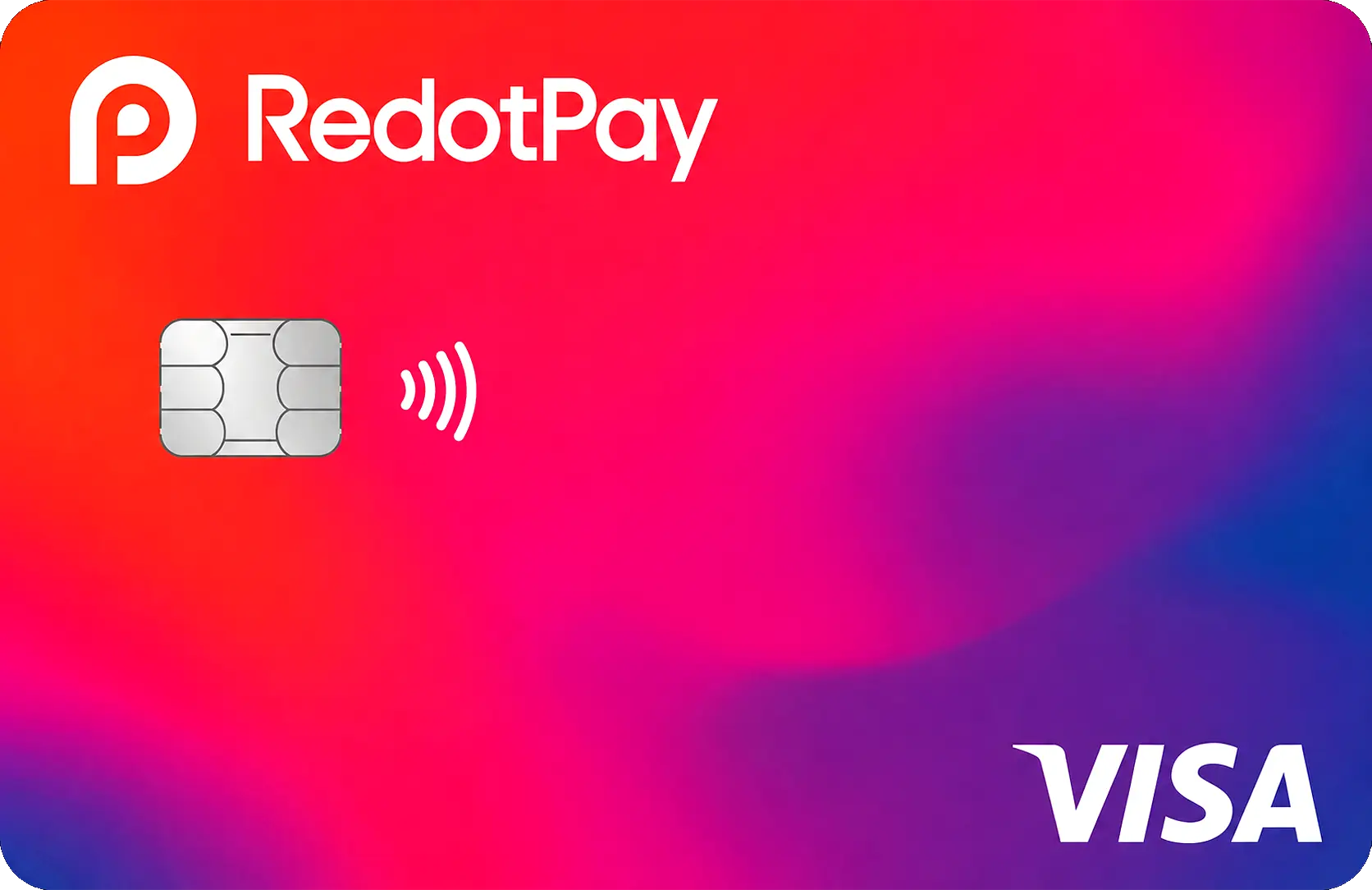
The RedotPay Card works well for people who already use stablecoins for everyday spending. But because each purchase can include a 1% crypto conversion fee plus a 1.2% foreign transaction fee, it's cheapest when you spend in your local currency and rarely use cash machines.
VIRGJ
✓ Reasons to get it
- Direct spending from stablecoin balance without manual exchange
- Both virtual (instant) and physical card options
- Supports Apple Pay and Google Pay in eligible regions
- No annual or monthly maintenance fee
✕ Things to watch
- Layered fees: 1% crypto conversion + 1.2% FX fee for non-base currency transactions
- Custodial wallet means you don't hold the private keys
- Several small fees (e.g., declined transactions, small transactions, card cancellation) can add up
- Region-dependent availability and features
Our full review
We tested the RedotPay Crypto Card, a Visa-branded crypto card that allows you to spend stablecoins like USDC directly from a custodial wallet. It's available in both virtual (activated in minutes) and physical (shipped globally) forms, and it can be added to Apple Pay and Google Pay where supported. The core promise is convenience: you bypass the step of selling crypto on an exchange and withdrawing to a bank before you can spend.
Fees: Where the Costs Add Up
The fee structure is layered. The card itself costs $10 for a virtual card and $100 for a physical card. RedotPay charges a 1.2% fee for transactions not in the card's default currency, and a separate 1% fee for converting crypto to fiat, making international spending potentially costly. ATM withdrawals incur a 2% fee, plus any operator fees, and daily and monthly limits apply (e.g., 5 withdrawals per day, up to $3,750 USD daily for a USD BIN). While there is no annual fee, small charges exist for declined transactions ($0.50 after the first three) and small transactions ($0.20 after the first five), which could be a nuisance for frequent, low-value users.
Custody and Everyday Use
This is a custodial product, meaning RedotPay holds the private keys to your funds. The company states it uses client asset segregation and partners with Cactus, a licensed trust company in Hong Kong, for regulated custody with insurance coverage up to $50M. This is a key distinction from non-custodial wallets where you control your own keys. For everyday use, the app provides clear controls for freezing the card, setting limits, and viewing transactions, which is a plus. However, the need to pre-load the card and be mindful of the various fees makes it less of a "set and forget" tool.
Who It's For
The RedotPay Crypto Card is best suited for users who already hold stablecoins and want a straightforward way to spend them online or in-person, especially in transactions where they can avoid FX fees. It's less ideal for heavy ATM users or those making frequent small purchases, as the fee structure is not optimized for that kind of activity. As with all crypto products, the value of your holdings can fluctuate, which affects your spending power.
Get $5 Bouns on the RedotPay Crypto Card with code VIRGJ
Enter VIRGJ at signup to get $5 Bouns on the RedotPay Crypto Card.
Fee breakdown
Lower bars are better. This is what the card actually costs you, verified against issuer terms.
How RedotPay Crypto Card compares
| Card | Custody | USD fee | Cashback | Rating |
|---|---|---|---|---|
| RedotPay Crypto Card this card | custodial | 1% | None | ★ 4.6 |
| Kast Card | custodial | 0% | 1.5% | ★ 4.5 |
| DPT Crypto Card | custodial | 0% | None | ★ 4.5 |
| Jupiter Card | custodial | 0% | 2% stablecoin | ★ 4.8 |


How to get the RedotPay Crypto Card
- 1Apply and Verify
Download the RedotPay app and create an account. Complete the mandatory KYC (Know Your Customer) process by providing a valid government ID and passing a biometric scan. Higher verification tiers unlock higher limits and more features.
- 2Order and Fund Your Card
In the app, navigate to 'Apply for a Card' and choose either the virtual (instant) or physical (shipped) card option. Pay the issuance fee from your RedotPay wallet balance. Then, fund your wallet by depositing supported cryptocurrencies like USDT or USDC.
- 3Start Spending
For the virtual card, add it to your Apple Pay or Google Pay wallet if supported, or use the card details for online purchases. For the physical card, activate it upon arrival, set your PIN, and use it for contactless, chip, or swipe payments at merchants and ATMs worldwide.
Frequently asked questions
Does the RedotPay card have an invite code?
What are the main fees for using the RedotPay Card?
Is the RedotPay Card custodial or non-custodial?
Does RedotPay Crypto Card have a promo code?
Reader reviews
No reader reviews yet. Be the first to share your experience with RedotPay Crypto Card.